FR


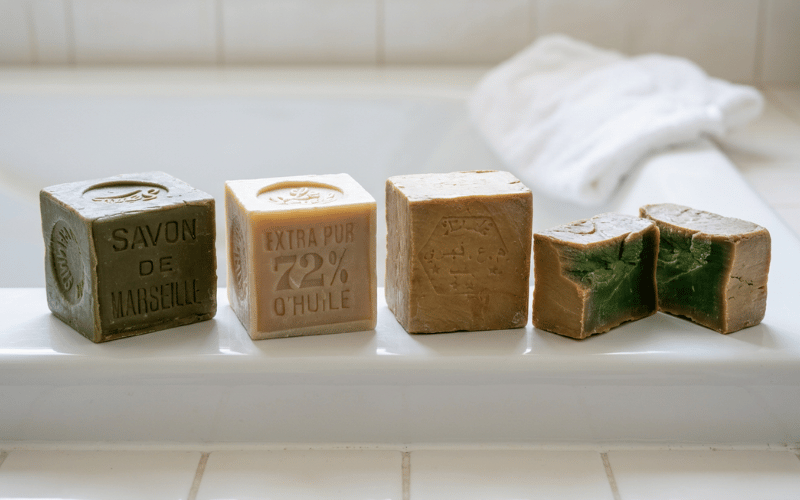
Marseille soap and Aleppo soap are two traditional soaps, but which one should you choose? Their ingredients, manufacturing methods and uses help explain what sets them apart.
From Aleppo Soap to Marseille Soap: Two Closely Linked Traditions
Aleppo soap and Marseille soap are two traditional Mediterranean soaps with closely connected histories. Aleppo soap, which originated in Syria, is often considered one of the predecessors of Marseille soap, whose production developed in southern France.
Both soaps are made through the saponification of vegetable oils and share certain traditional manufacturing steps, including cooking the soap mixture in a cauldron. However, they differ in their recipes and certain production methods, which have evolved over time. Despite their historical and technical similarities, their compositions differ, as we will explore below.
What Are the Differences in Their Ingredients?
The main difference between Marseille soap and Aleppo soap lies in the vegetable oils used to make them. Although both are produced through the saponification of vegetable oils, their traditional recipes differ in the ingredients they contain.
Marseille Soap: Recipes Made with Different Vegetable Oils
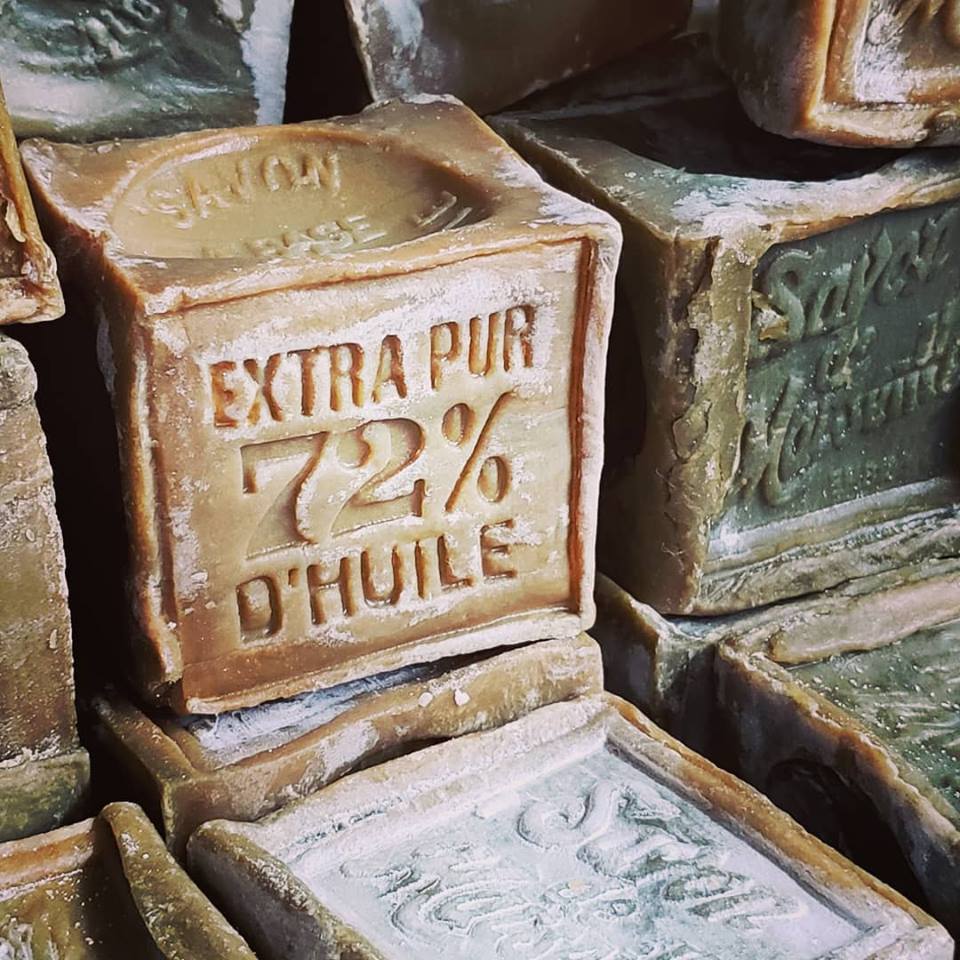
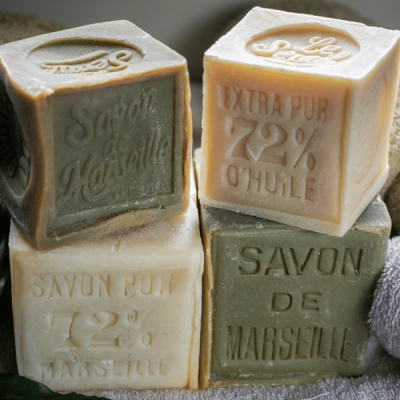
Traditional Marseille soap can be made with different vegetable oils, depending on the manufacturer’s recipe. Some formulations are made with olive oil, while others contain coconut oil or a combination of palm kernel oil and sunflower oil.
At Au Savon de Marseille, our selection includes soaps from the Le Serail and Marius Fabre soap makers, whose recipes vary by product. These differences in composition can affect the soap’s colour. To learn more, read our article about the differences between green and white Marseille soap.
Aleppo Soap: The Combination of Olive Oil and Laurel Berry Oil
Traditional Aleppo soap is distinguished by its combination of olive oil and laurel berry oil. The proportion of laurel berry oil varies depending on the recipe, making it an important characteristic of this soap. Unlike Marseille soap, whose recipes may use different vegetable oils, traditional Aleppo soap is based on this distinctive combination of two oils.
What Are the Differences in Their Manufacturing Processes?
Marseille soap and Aleppo soap are both made using traditional saponification methods, but certain steps set their manufacturing processes apart.
Marseille soap is made using a cauldron-based process that includes a saltwater wash, several cooking stages and successive washes. The soap paste is then poured into large moulds before being dried, cut and stamped.
For traditional Aleppo soap, the cooked paste is spread across the floor of the soap-making workshop to cool. It is then cut into cubes and stamped by hand. The bars are subsequently stacked and left to dry for several months, a characteristic step in this traditional process.
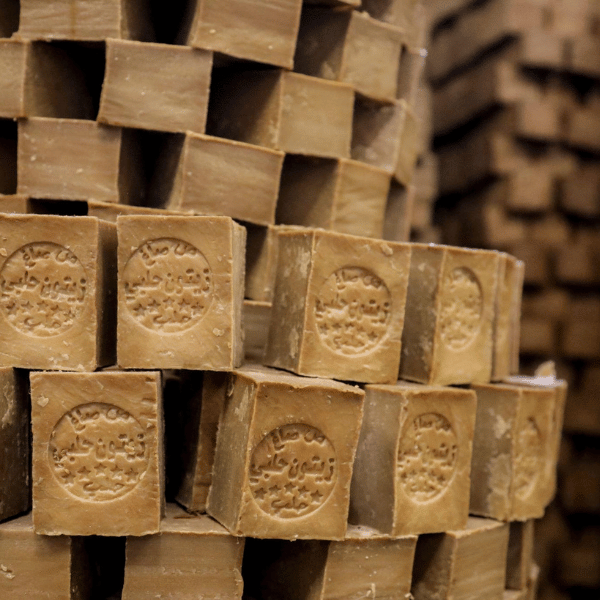
Although the two soaps share a long-standing tradition of craftsmanship, their manufacturing processes include distinctive steps that contribute to their individual identities.
What Are the Characteristics and Uses of Each Soap?
Both Marseille soap and Aleppo soap can be used for everyday personal hygiene, but their characteristics vary depending on the oils they contain and the formulation. Here is an overview of their key features and common uses.
| Feature | Marseille soap | Aleppo Soap |
| Traditional composition | Vegetable oils: olive oil, coconut oil, or a combination of palm kernel oil and sunflower oil, depending on the recipe. | Olive oil and laurel berry oil. |
| Appearance | Generally green when made with olive oil, or beige to white in some recipes using other oils. | Generally brown on the outside and greenish on the inside. |
| Common uses | For washing hands, body and face, as well as household cleaning, including laundry and cleaning certain surfaces. | For washing hands, body and face. |
| Key feature | Versatile: suitable for personal hygiene and various household uses. | The proportion of laurel berry oil varies depending on the recipe. |
| Choosing a product | Check the oils used and the manufacturer’s recommended uses. | Check the ingredients and the proportion of laurel berry oil. |
Interested in discovering these traditional soaps? Explore our selection of Marseille soaps and Aleppo soaps in our online store to find the one that suits your needs.
Marseille Soap or Aleppo Soap: Which Should You Choose?
-
Choose Marseille soap if you are looking for a versatile soap for everyday personal hygiene and, depending on its composition, various household uses.
-
Choose Aleppo soap if you are looking for a traditional soap made with olive oil and laurel berry oil, whose proportion varies depending on the recipe.
Ultimately, the choice between the two soaps depends on the composition you are looking for, how you intend to use the soap and your personal preferences. By checking the ingredients and the manufacturer’s recommendations, you can choose the soap that best fits your daily routine.