
 FR
FR

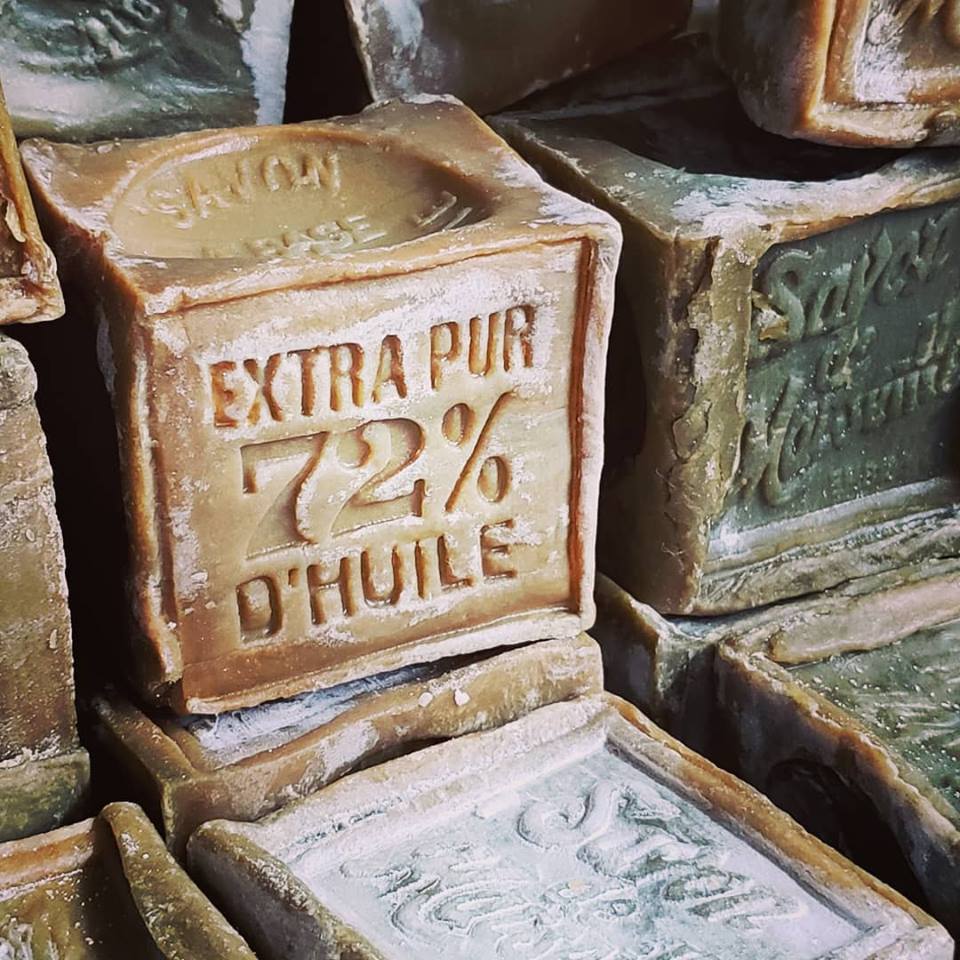
Aleppo soap is one of the oldest traditional soaps still made today. Recognizable by its simple composition of olive oil and laurel berry oil, it has been appreciated for generations for its properties and versatility. But what makes this soap so special, and what benefits can it offer the skin?
What Is Aleppo Soap?
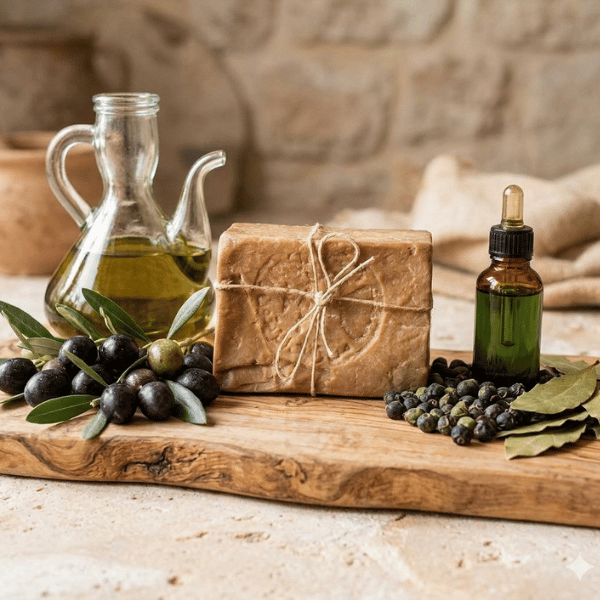
Originating in the city of Aleppo, Syria, Aleppo soap is made using traditional know-how passed down through generations. Its recipe is based primarily on two vegetable oils: olive oil and laurel berry oil.
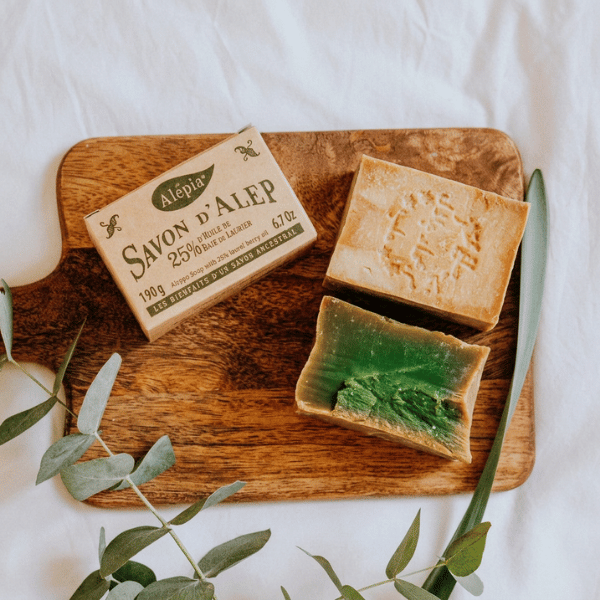
Traditionally made by cooking the oils, the soap is then cut into bars and left to dry for several months. This long drying period contributes to its characteristic appearance, with a golden-brown outer layer and a green centre. Its simple composition and traditional manufacturing process help explain why Aleppo soap remains popular among those looking for a soap made with vegetable oils.
The Benefits of Aleppo Soap for the Skin
The properties of Aleppo soap are mainly attributed to the vegetable oils it contains. Olive oil and laurel berry oil each have their own characteristics and contribute, in their own way, to the properties of the soap.
Olive Oil: A Vegetable Oil Appreciated for the Skin
Olive oil has traditionally been used in soapmaking for its emollient properties. Rich in fatty acids, it provides an appreciated base for soaps designed to cleanse the skin and contributes to their texture and the feeling of comfort after washing.
In Aleppo soap, it forms the base of the recipe and contributes to the soap’s texture and cleansing properties. Its presence in a short ingredient list may appeal to people who want to simplify their skincare routine or who are looking for products containing few ingredients.
Laurel Berry Oil: The Characteristic Ingredient of Aleppo Soap
One of the features that particularly distinguishes Aleppo soap is the presence of laurel berry oil. This vegetable oil, obtained from the berries of the laurel tree, has traditionally been appreciated for its purifying properties and for the feeling of comfort it can provide to the skin.
It also gives the soap its characteristic botanical scent and contributes to its appeal in facial and body care routines.
It is the combination of these two oils that gives Aleppo soap its distinctive characteristics. Olive oil forms the base of the soap, while laurel berry oil contributes to its properties and distinctive character.
Want to know which Aleppo soap to choose for your needs? Read our guide “How to Choose Aleppo Soap” to learn more about the different concentrations of laurel berry oil and their characteristics.
How to Use Aleppo Soap
Aleppo soap is versatile and can be incorporated into different parts of your daily routine.
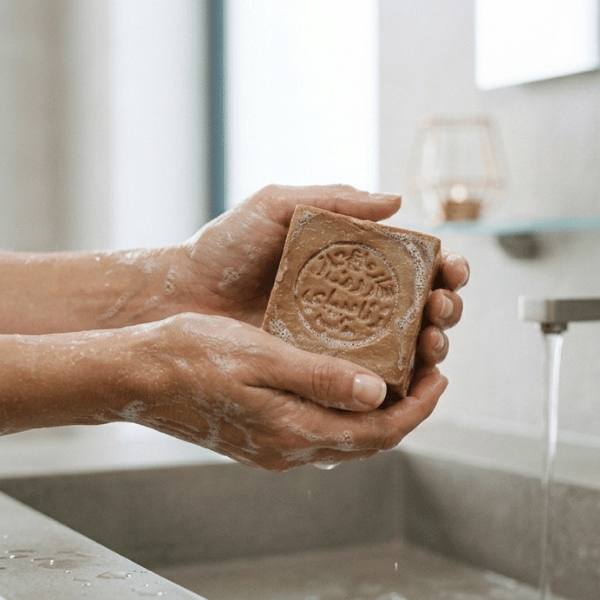
For the face, it can be used as a cleanser. Lather the soap between your hands before applying it to damp skin, then rinse thoroughly.
For the body and hands, use it like a traditional bar soap to cleanse the skin every day.
For the hair, Aleppo soap can also be used as a shampoo by people who want to simplify their routine. As with any hair care product, it is best to adapt its use to your hair type and needs.
How to Store Aleppo Soap
To extend the life of your Aleppo soap, let it dry between uses and avoid leaving it sitting in water.
For more tips on extending the life of your bar soaps, read our article “How to Properly Store Bar Soap to Make It Last Longer.”
Conclusion
Appreciated for generations, Aleppo soap stands out for its simple composition of olive oil and laurel berry oil. This traditional recipe and its versatility make it a soap that can fit into a variety of skincare routines, from the face to the body.
With its short ingredient list and long history, Aleppo soap remains an interesting option for those who want to discover a traditional soap made with vegetable oils.